Blog Update

Hello, readers of Mystical Pagan

Please feel free to browse around and look over the many posts that can be found here. I hope you find them useful.

Blessings...
Ma'iingan

Pinned Post

How to Become a Witch/Wiccan

It is often asked where one should start when they've discovered this wonderful system. First of all, when you ask this question, does...

Showing posts with label Tools. Show all posts

Sunday, April 30, 2017

Cauldrons, Cauldrons...What Can I Use??

When someone thinks "Witch"...automatically they think "cauldron". The two words seem to go together like Peanut Butter and Jam. But is it necessary to have a large, black, cast iron, potbellied pot to use as a cauldron? What's the purpose of a cauldron anyway? When we understand the purpose of the cauldron, we soon realize that it's not the container that matters.

What is a Cauldron For?
What its for depends on the system you're following. During the earlier days of Witchcraft, the common household item was the cauldron. Everyone had one. It was the central appliance in the home that was always in use, preparing meals for the day or preparing foods for the coming weeks or months. For this reason, cauldrons are fairly central to Witchcraft as they were common place items (like the broom). They became incorporated with craft use.

In non-specific Traditional Witchcraft settings (not British Traditional Wicca/Witchcraft), the cauldron is used as a means of holding items. More commonly it is used to hold things that are being burned, like paper, herbs, etc. It is also a place to hold small indoor fires. It can also be used as a means of divination, once filled with water or it can be used to make ritual meals.

In Wicca, and other Pagan religious practices, the cauldron is a representation of the Goddess' womb (being round in shape). It is a representation of one half of fertility to create life (the phallic symbol, such as the wand, tapered candles, etc, represent the other half). When not in use its place is set with the other feminine/Goddess symbols on the altar.

What Can I Use as a Cauldron?
Well, that depends. What are your plans for the cauldron? And are you a purist, or are you willing to be imaginative?

If your plans for a cauldron is to burn items, then the traditional cauldron is not necessary (though looks cool on your altar, especially if you can get your hands on the cutest small, table-top cauldron). Any burn-proof dish will suffice. Many stores, including dollar stores sell small cooking pots (all you need do is remove the handle). You can also use ash trays or glass dishes with sand on the bottom, and a trivet underneath to prevent your surface from being burned.

If your purpose is to hold water for divination, a black coffee mug will do just as well as any expensive cauldron. If it's merely a representative of the feminine divine...well then naturally anything feminine can be used (flowers, Goddess statues, etc)

If you're looking for something bigger for, say, outdoor rituals and gatherings, most department/outdoor stores carry "Dutch Ovens". While not potbellied, this "oven" IS cast iron and is used in a similar manner that the cauldron was used for (i.e. cooking meals over a fire). This is also perfectly acceptable, especially if you are hosting a large gathering and want to make use of fire magic.

You are only limited by your imagination (and the purpose for the container) when using a cauldron. If you cannot afford to buy a cauldron, look at what you want to use it for and determine if you have some sort of alternative.

Saturday, January 28, 2017

"Where Can I Get Herbs for Practice?"

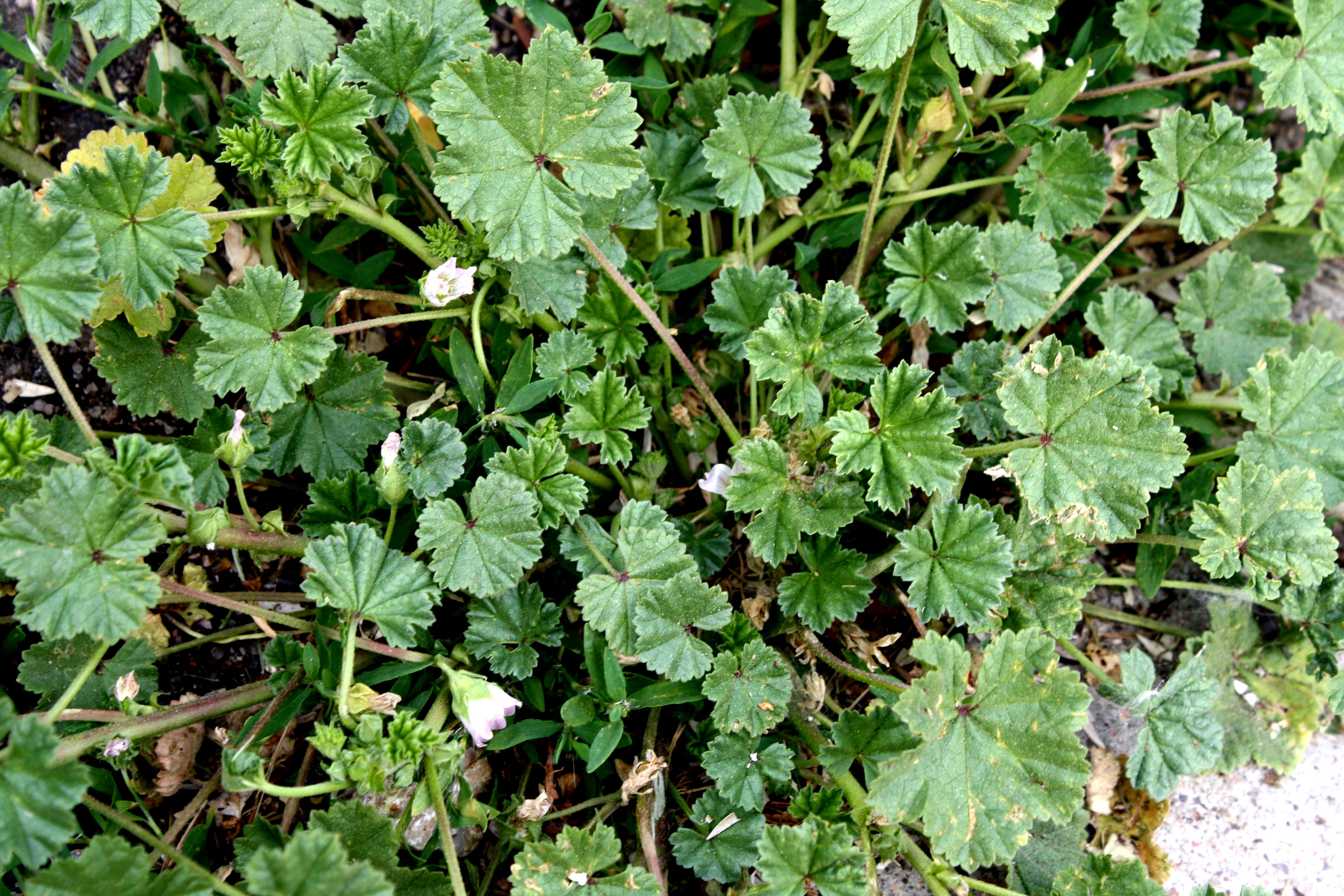
Common Mallow Weed
It's a fairly common question I see on a regular basis from people within the Pagan community, asking where they can go, either in a brick-and-mortar building or online, to purchase the herbs they "need" to practice their Witchy paths. 

I used to be one who used to worry that I couldn't practice my path because I didn't have access to such herbs as Angelica. My local stores only sold the very basics of herbs in the culinary section...and it was just as limiting going to a bulk store. That, and most stores often add "filler" to their herbs, so you never know if you're getting the genuine article.

But...I took it upon myself to do some independent learning and discovered the magic of plants that grow in our very own yards, and it cost me all of $0 to collect. Now, I don't suggest people go out and take the same course I did (for one, I don't think the course is offered anymore, and two, it was a whopping $600 to take, but it attained me an accredited certificate (endorsed by my gov't) in herbal healing, so I know what I'm talking about when I discuss plants and herbs). 

What I do mean is, to take a little time and maybe obtain some books on common plants that may grow in your area. The Magic and Medicine of Plants is one book I reference a lot (though was not part of my studies...I got this book a LONG time ago, I believe from my mother). It's a wealth of information on common plants that grow all over the place. Flipping through the pages I discovered so many plants that grew in my very own back yard were plants that are most often called for in many spells and ritual packets. 

I discovered the tall plants with yellow flowers and huge, broad leaves growing in behind my neighbors garage was actually Mullein. Not only is it magically useful, but also useful for respiratory issues; the broad flat leaves with straight veins that grew in my yard ended up being plantain, good for skin issues, such as insect bites. The large, thorny plants with purple flowers growing beside my house? Blessed Thistle (there's also some stinging nettle and poison ivy as well lol. We had the unfortunate luck of finding them while removing "weeds" from where we wanted to build a shed). These plants are growing in and around my home, yet I was worried about how I was going to buy these items (because at the time I did not have a credit card for online purchases). 

It's amazing if one is to look at what we consider "common weeds", are actually VERY useful, not only medicinally, but magically as well. Last year I discovered a new plant; bindweed. It was growing all over a neighbors ditch. Our campsite we go to every year? Contains St. John's Wort!

I think people are starting to get too into the commercial value of Paganism and are losing touch with discovering what's growing outside their own homes. They're moving away from the natural aspect of the system because of the "freedom" of the internet. If you want a plant to incorporate into one of your spells? You probably have some growing in your back yard and don't even know it. A house I lived in about 6 years ago had wild white sage growing in the front yard (I managed to pick a big bunch before we moved). My husband's grandparents also have wild sage growing outside of their home (I also managed to pick a bunch before we left lol). 

I think it's rather important for people to start researching the plants and herbs growing in their area. For one thing it will save you in the wallet. Another, because these are considered "weeds" and grow wild, the don't require anyone to be a gardener, so you don't need any specific skills. Lastly, it brings you that much closer to nature, and thus the divine. 


Thursday, November 24, 2016

The Art of Cleansing/Dedicating Tools Without Tools


It is often expected that in order to cleanse, consecrate and dedicate tools, you need tools to do this. But what happens when you have tools you need to use in order to do these cleansings, but they are not cleansed or dedicated themselves? Here I offer a solution to cleanse and dedicate your tools for use, with nothing more than yourself.

During typical cleansing rituals, you often call upon the elements through the use of tools (candle for fire, incense for air, etc). It's possible to do this without the benefit of tools.

First you take your tool and cleanse it in a physical sense (if needed). Next I offer optional solutions. Feel free to alter as needed.

Take your tool and present it to the East. Gently blow on the tool (I'll explain the "why's" of all this below). State appropriate words like:
"Spirits of the East, powers of Air, I cleanse this tool so that it may be free of all hindering residual energies"

Next, take the tool and present it to the South. Hold the tool close to your heart (please be careful if you're doing this with an athame or other sharp tool. I don't want you to cut yourself)
Again, make appropriate statement like:
"Spirits of the South, powers of Fire, I cleanse this tool so that it may be free of all hindering residual energies"

Next take the tool and present it to the West. Ok...this may sound gross, but it's not half as gross as some of the other Witchy tasks that are out there lol. Lick...either the tool itself, or your finger, then apply to the tool (I lick my finger, then draw a pentagram).

Make appropriate statement like:
"Spirits of the West, powers of Water, I cleanse this tool so that it may be free of all hindering residual energies"

Present the tool to the North. Hold the tool with one hand underneath it, and the other hand on top of it (sort of cupping the tool). Make sure you have as much of your skin contacting the tool as you can (but don't hurt yourself in the process).

Make appropriate statement like:
"Spirits of the North, powers of Earth, I cleanse this tool so that it may be free of all hindering residual energies"

Hold the tool to the sky:
Make appropriate statement like:
"I present this tool to Spirit, that it may be cleansed of all hindering residual energies"

This is a generic way to cleanse your tools. No other tools necessary. Now, why do we do what we did in this "ritual". When we blow on the tool, we are using the power of air, coming from our own mouths. Holding the tool to our heart, warms the tool, which represents fire...or the fire of our spirit. Licking the tool, or applying our licked finger to the tool represents water, as we are made up primarily of water. Holding the tool in our hands, represents earth, the physical contact; matter that makes the rest of us. And obviously, holding the tool to the sky to present it to spirit/deities/etc.

Now naturally, I present everything in my blog as generic, open to alteration because I know not everyone follow the same patterns and rituals. Please, feel free to alter this to suit your needs (if you don't like the idea of licking the tool or your finger, BY ALL MEANS, use water lol).

In the same manner you can dedicate the tool to it's job, OR simply place your tool on your altar, or a pentacle/altar tile and state "this tool is dedicated for (insert use)".

Witchcraft need not be complicated with all these complicated, special tools. Remember that our ancestors and predecessors didn't have fancy tools to dedicate and consecrate. All they had was themselves.

If you REALLY want to get rustic...take your tool outside and perform it in a similar way as above, but instead of holding the tool, place it on/in the ground; instead of licking the tool, run it in a river or lake; hold it to the winds instead of blowing on it; hold it to sunlight instead of holding it to yourself.

There are LOTS of ways to cleanse tools that don't involve other tools. Use your imagination.


Tuesday, October 18, 2016

The Altar 2.0 - Seasonal and Sabbats

The altar not just a set up once and forget it type of deal. Surely there are plenty of people who own temporary altars, but those are not the kinds of altars I will be talking about in this post.

The altar can be changed periodically to suit the changing seasons, especially for those in specific Wiccan systems. Lots of Wiccans like to set up their altars to coincide with the changing seasons, or with the different Sabbats. But how do we do this? Here I will offer some suggestions.

The next upcoming Sabbat at the publication of this post is Samhain. Probably my most favorite Sabbat. I'd always loved Halloween, and thus, since becoming Pagan, Samhain has become incorporated with that love.


At this point my altar is fairly basic. But I had bought some clear colored plastic acorns and leaves in which I sporadically placed on my altar to remind me of the upcoming season and Sabbat. But there are so many other ways one can decorate their altar, while not taking anything away from the spirituality of it. Because my altar is on a fairly large wooden box, I could also string up some leaf garland or even add a wreath (though I could also add the wreath to the wall as well). Other seasonable items you can place on your altar for this time of year can include gourds (either real or resin) such as Pumpkins and/or squash. Small skulls or skeletons, black birds, or Witchy representations, can be added as a reminder for the upcoming holiday of Halloween. No need to necessarily separate Halloween from Samhain (if you don't want to), especially since the two are so intertwined.


Saturday, July 2, 2016

The Altar

Depending on your spirituality and what path you follow, the altar can be a primary component of your worship and workings.

In Wicca, it is a central focus of religious veneration and worship, as it is a primary component of the religion and almost a requirement (at least to traditionalists). It is the surface on which symbolic representations, offerings, and items to be blessed are placed.

In traditional settings the primary tools of use are placed on the altar for use during the many rituals that take place during the year, both Sabbats and Esbats. There are numerous ways one can set up their altar, and of course it can be based on you preferences, but here are some suggestions if you are fresh to the path and have no idea where to start.

Many people like to associate their altar with the deities they follow (God and Goddess). They'll place their implements according to their associations with each. Others will set up their altars according to the elements. Here are some examples below.

Deity Altar Setup
As you can see, this altar above is set up in regards to the Gods. Tools are often associated with certain deities...so for example the cauldron is associated with the Goddess as it represents her womb, whereas the athame represents the God as it is a phallic symbol. Items that are considered "feminine" would sit on the Goddess side of the altar. Items that are considered "masculine" would sit on the God side of the altar. 

Element Altar Setup
This altar setup is in association with the elements. Tools can also be associated with certain elements. Now...there are some who will associate some tools with different elements than what I have set here...and that's ok...this is just an example (my personal altar isn't set up in either fashion).

So...for the element altar, like I said some tools sit in certain places that are associated with certain elements. The north side of the altar is associated with Earth and will contain "Earth" items, like flowers, stones, green items, etc, whereas in the South, "Fire" items would sit there like a fire lava rock, candles, red items etc. 

As I said though, there are MANY setups for altars...this is but a bare bones basic setup for those who are just starting and don't know how to set up their altar. When I started, mine was set up in the elemental fashion in the second example. I had tried setting it up in the Deity example, but found it terribly one-sided for my tastes. I like things to be somewhat evenly distributed. 


This is my altar that some may have seen before. There have been some subtle changes to it but nothing worth noting. My altar is set up in a way that suits me and my tastes. I'm in no way a traditionalist, so mine is not set up in a traditional fashion. My Goddess sits central on my altar, in front of a black candle, with a battery operated candle atop of it (I cannot light actual candles in my home, as the smoke is bothersome to my husband and aggravates his health condition). To the front of her, is a dark feather, as well as stones associated to my Goddess. To the front right is the box in which my Tarot cards sit (I'm trying to learn the Gilded Tarot). To the front left is my prayer book. Not so much a book that contains prayers I say (though there are some in it), but requests I make at the time of my prayers. To the back left is an abalone shell and a braided ring of sweetgrass, as well as a turtle figurine, all given to me by my mother. They are important aspects to me as they represent ancestral teachings. To the back right of my altar is a bottle of "intuition" oil I made my self. It contains essential oils in a carrier. Normally I just inhale it for the scent, but I can if I so choose anoint myself with the oil (hence the carrier). The gold box in the back holds different things at different times. Right now there's a money spell in progress in it as well as some offering coins to my Goddess, but at the time of this picture, there is seasonal representations. The Tarot card shown is symbolic of...Imbolc, I believe (I can't remember lol). There is also a tall bottle with pink butterflies in it, also meant to be symbolic. 

There are many other ideas for altar setups. Some quite simple, others overly elaborate and complex. 

Source: Unknown
Here is an example of an overly complex altar. In all honesty...I love this setup. If I had the room, I'd love to set up my altar in this way. One's altar need not look like this. It's so chaotic and a lot of mixed energies appear to be here, but if you do it right...the energies should work in harmony with each other. But there's also nothing wrong with going super simple. 

Here is an example of a super simple setup. This would work for someone who is VERY limited on space. All it consists of is a deity representation (or two if you work with two) and some candles (one would even work). It's still an altar and will still serve the purpose of an altar...it's just very simplistic. 


So here are some basic ideas of how you can set up your altars. Feel free to take some of these ideas and tweak them to your preferences. Don't make them exactly as you see here...feel free to add or remove things as needed. I hope this is helpful. 

Wednesday, March 30, 2016

Witchcraft and Tools

"I want to become a Witch. What tools do I need?"

If you're coming into Witchcraft completely fresh and uneducated, then the VERY first step to becoming a Witch is to become educated. There's nothing wrong with being uneducated when you first decide you want to be a Witch; we all were at some point. Even me.

Unlike me, however, you have someone with knowledge to lead you down, roughly the right path. I had no one and had to learn everything on my own. Naturally you're going to make mistakes now and then on your own, but then you wouldn't learn anything if you didn't.

The first mistake EVERYONE fresh to this path makes is obtaining things BEFORE they know what they're for. It's so fun and exciting when you start a new project you just want to get out there and buy everything you can get your hands on, and everything everyone recommends to you. But if you do that, pretty so you'll end up with a hundred tools you know nothing about, and they end up sitting in the corner, collecting dust and never being used. How do I know this will happen? Because I've done this, as well as just about any other practitioner I know. We've ALL made this mistake. And why did we make this mistake? Because we didn't listen to those experienced who told us not to (IF...there was anyone around).

I see plenty of people out there who ask this question: "what tools do I need to be a Witch". At the point where you haven't even bought your first book, you shouldn't be buying tools yet. It's nice to have them, but when it comes right down to it, do you understand the purpose BEHIND the tools? We all have the idea that the wand is supposed to be waved around and something is supposed to happen. But that's not quite what the wand does. What's an athame for? Why are we using a double-edged knife, especially if people are adamant that Witchcraft is not the sinister craft people make it out to be?

Each tool in the Witches arsenal has a use and a meaning. Without understanding the meaning behind each tool...you're just going through the motions and accomplishing nothing. In the beginning the ONLY purchases a novice should be making is books. Buy all the reputable reading material you can and sit down and read them. Soak in what they have to say; understand what they are trying to teach you; determine if you really need an athame, or if you can simply just get by with a wand or even using your finger. I have a listing of recommended books in the above tab.

Below I will go over the many used tools Witches use and why they use them.

ATHAME - Primarily a Wiccan tool, the athame is a double-edged blade used for directing energy. Traditionally, it's a black handled knife that is only used for things like consecrations, casting the circle, etc. Most traditionalists and purists will tell you it never cuts physical items...but not all Witches are Wiccans so those who use the athame outside a ritualistic structure may use the athame for all sorts of things, INCLUDING cutting physical items. It is also known that many non-traditional Wiccans have used the athame for physical cutting as well, but to each his own, especially if they're not traditional.


WAND - Not unlike the Athame, the wand is also a directional tool, and is also primarily a Wiccan tool (though there's nothing stopping a Witch from owning and using one). Typically it's used to cast a circle, but also to call elements. Unlike the Athame, though...it's not a cutting type tool, therefore it cannot be used to cut physical items. The Wand can be made of a variety of materials, but it's favored material is wood. Usually people will find branches they've found on the ground or cut from a tree, decorate it in whatever way they feel is best, consecrate it and put it to use, however there are some who have used other items to make their wands, including wooden dowels from their local hardware store, copper tubes, or even crystals.


CHALICE - It's not a trade secret what a chalice would be for, though again, it primarily would be used in Wicca, rather than Witchcraft. A chalice is nothing more than a fancy cup, and is sometimes used on the altar to hold water in the West, or to hold ritual drink. In traditional settings it is one of the key components of The Great Rite in which the athame is dipped, point down into the cup (the purpose of The Great Rite can be found in other resources).

CANDLES - Again, no trade secret what candles would be used for. There are lots of reasons why candles would be used in both Wicca and Witchcraft. In both settings it could be used for illumination and the creation of "atmosphere" to get you into the right frame of mind for working. In Wicca it could be used as deity representations, representations of the elements, etc. In Witchcraft it could be used to represent an intended person, or used to light various things from other candles, to paper, to herbs for incense.

CAULDRON - Again, both Wicca and Witchcraft use the cauldron. It is a black, cast-iron, pot-bellied pot. Generally small in size, though they DO come in a wide variety of sizes...but with size comes cost. Smaller ones are easier to use and have easier portability, as well as fit nicely on one's altar/work space. In Witchcraft, the cauldron can be used to burn items such as herbs, paper, effigies, etc while conducting workings. It can also be used to hold water for water divination or to charge items. In Wicca, the cauldron is representative of the Goddess' womb, therefore it is a feminine tool and representative of the Goddess.

PENTACLE - In Wicca, the "Pentacle" is actually nothing more than a disk on the altar on which you charge items (which is why so many people are confused as to what a "Pentacle" actually is). It MAY contain a pentagram, but it could also be marked with a Triquitra, Triple Moon symbol or other symbols. It is used to charge items that have been consecrated and are now awaiting to be designated for use. It is representative of the element of Earth, and (if the altar is elementally set up) is set in the north.

In Witchcraft a Pentacle is a round disk, but generally does solely contain a Pentagram in the circle. It is used to charge items created in workings (i.e. spells)

BOLINE - Not really a mandatory item in Witchcraft, it is the opposite tool of the Athame. Where the athame is not used to cut physical items, the boline would be the tool used instead. To contrast the athame's black handle, the boline would have a white handle, and would be used to cut things from paper, to cords to herbs. Few Witches may use a boline, as some may simply use their athame, believing the athame may be used to cut everything from energy to physical items.

BESOME - Ritual Broom. Some Witches may have a Besome merely to be symbolic. Wiccans use the besome to ritually cleanse their space before conducing ritual to rid the area of any negative or influencing energies.


There are also a few other items both used in Wicca and Witchcraft that are fairly straight forward:
-Incense: Used for atmosphere or to carry prayers
-Blessed Water: Used to bless or dress items
-Statuary: Representations of deities


**More images to be added later**